A9 ranks results on two axes: relevance (how well the listing matches the keyword) and performance (sales velocity, conversion, reviews). It resembles Google circa 2010 — not yet fully AI, so it's still "gameable" with keywords + sales velocity. Your job: optimize relevance and push performance.
What is A9?
A9 is Amazon's search and ranking division — it decides which products show in search and in what order. Recently Amazon is layering in COSMO, an AI-leaning system that better understands shopper intent.
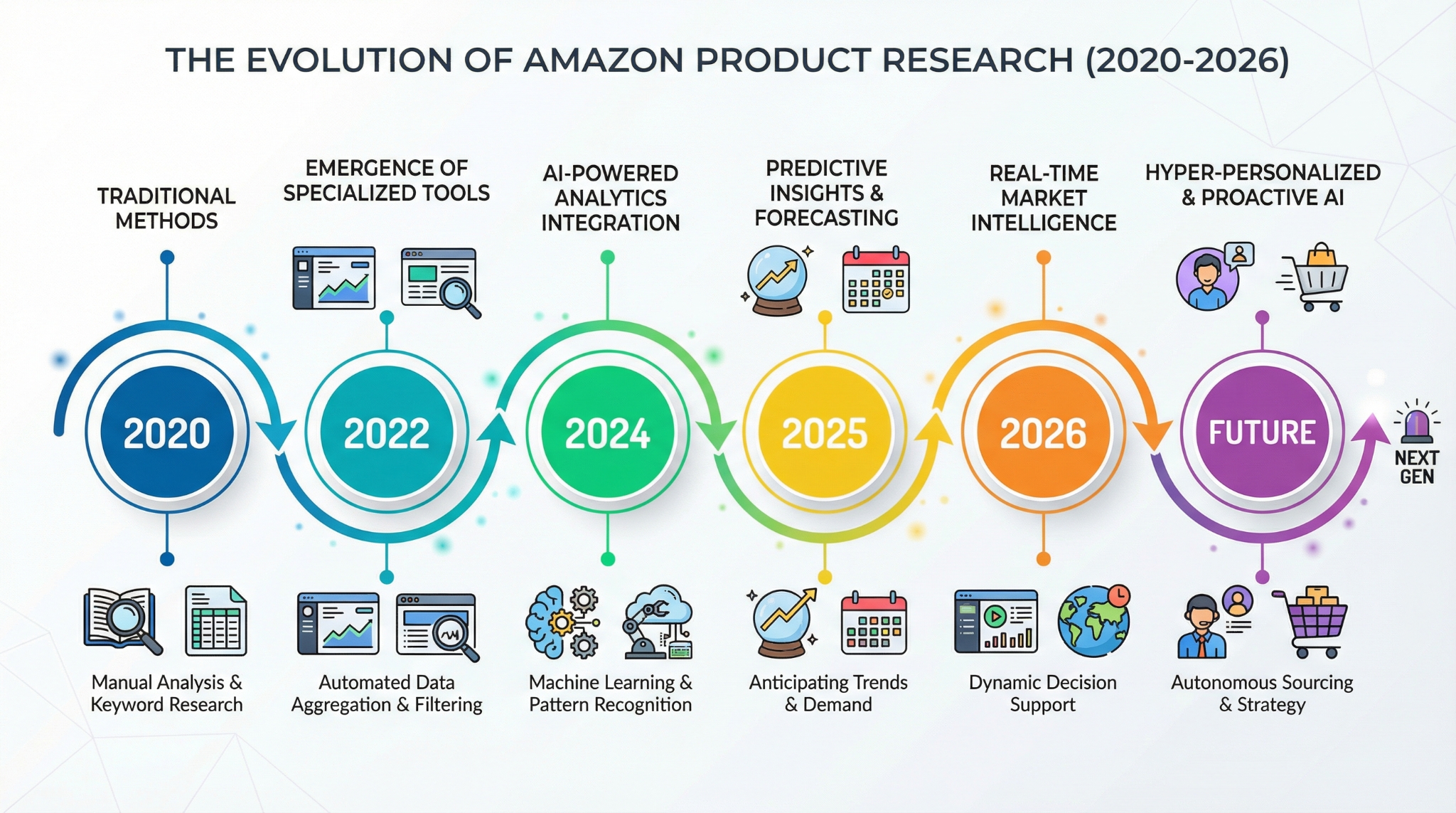
Amazon's algorithm and research tools have evolved fast.
The two axes: relevance & performance
Relevance: title, bullets, description and backend keywords matching the search. Performance: recent sales velocity, conversion rate, review rating, and Buy Box ownership. Amazon favors products likely to convert (it earns fees).
Key ranking signals
- Sales velocity (recent) — the biggest lever.
- Conversion rate (CVR) and click-through (CTR).
- Review rating + recency, with verified authenticity.
- Buy Box ownership + competitive pricing.
- Text relevance (title/bullet/backend keywords).
- In-stock + fast fulfillment (FBA helps).
How to rank higher in 2026
(1) Optimize relevance with real keyword data (SellerSprite keyword + reverse ASIN) placed in title/bullets/backend. (2) Push performance with targeted PPC to build sales velocity, collect reviews, keep the Buy Box + price. (3) Don't spam — Amazon purges fake reviews and may penalize low-quality listings (Panda-style).
FAQ
What is the Amazon A9 algorithm?
Amazon's search/ranking algorithm, ordered by relevance + performance (sales velocity, conversion, reviews).
How do I rank higher on Amazon in 2026?
Optimize relevance (real title/bullet/backend keywords), grow sales velocity + CVR, earn reviews, keep the Buy Box, run targeted PPC. Use SellerSprite for keyword + competitor data.